Confronting Evil: Assessing the Worst of the Worst

The concept of good and evil has coexisted since the dawn of mankind. It is a universal notion shared by different religions, civilizations and historical epochs.

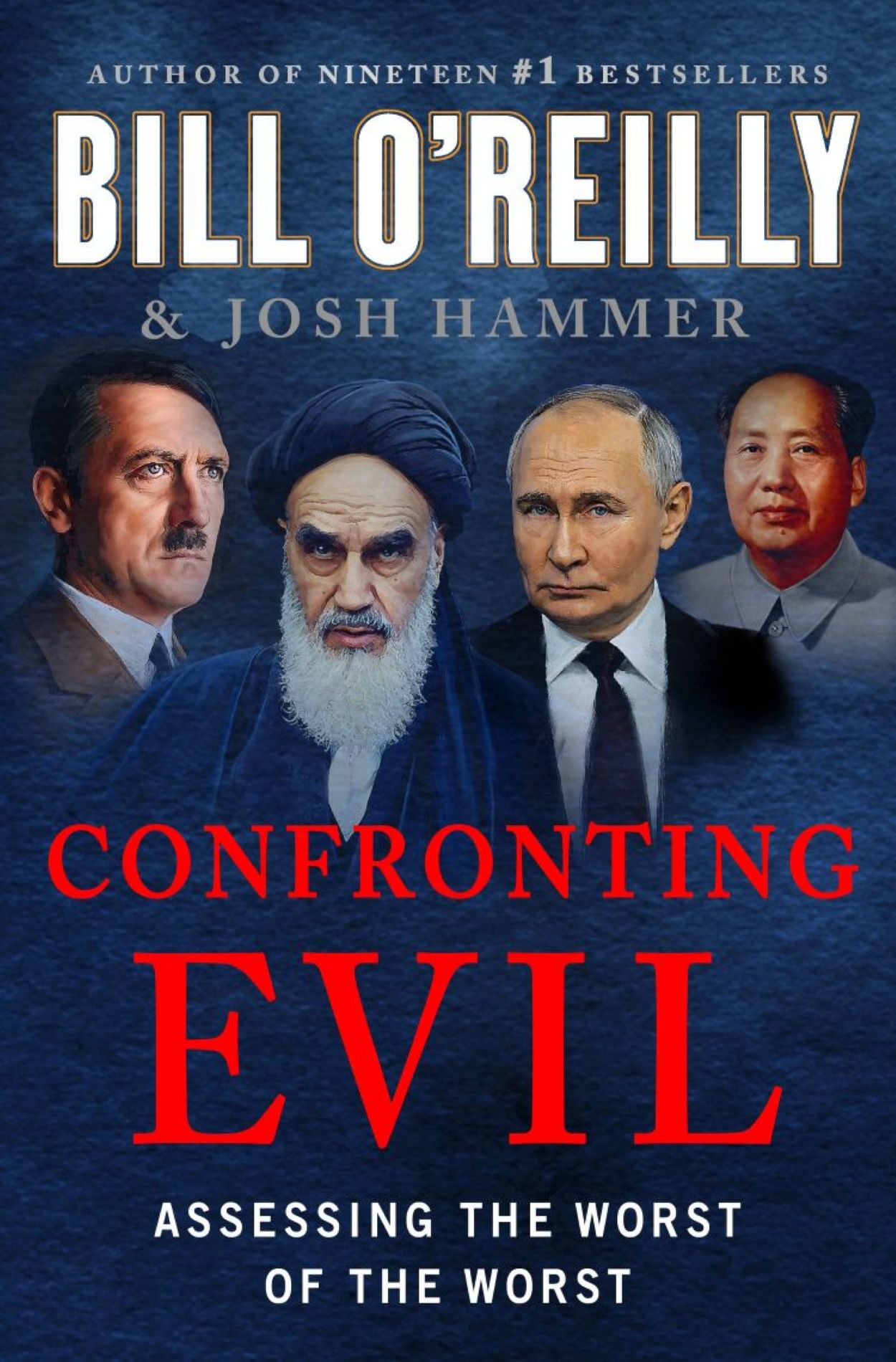
Political commentator and bestselling history author Bill O’Reilly describes evil this way: “Harming a human being without remorse.” That’s a pithy definition and one he and co-author Josh Hammer expound on in their book, ‘Confronting Evil: Assessing the Worst of the Worst.’ The second book in the ‘Confronting’ series, their new book lists the worst people in human history and the deeds that earned them that infamous distinction.

Of the twelve individuals/groups listed, many are responsible for the death of millions of human beings. Obvious names like Genghis Khan, Joseph Stalin and Adolph Hitler comprise the rotten roster of evildoers, but the names and deeds of others will surprise readers. Three groups written about were America-based, and three others are still alive and causing mass suffering and death today.

Evil is a Plague

The authors label Caligula, the third Emperor of Rome, as the most powerful man in the world of his day. At one point he ruled over 75 million people in an empire spanning 2.3 million square miles on three continents.

Born in AD 12, he was crowned emperor in AD 37. Initially adored by the public, six months into his reign he was struck by a mysterious illness believed today to be a brain tumor or partial stroke. After that everything changed. Consumed by paranoia, he went on a rampage of murder, sexual debauchery and engaged in fanciful whims of violence against Roman senators and citizens. As Rome deteriorated with malaria, plague and smallpox, life expectancy fell 20 percent in just three years. Regardless, Caligula’s only concern was consolidating power, inflicting violence and quenching his sexual appetites.

The Praetorian guard led by his personal bodyguard, Cassius Chaerea, murdered 28-year-old Caligula by fatally stabbing him.

Henry VIII

Like Caligula, Henry the VIII’s early reign beginning at age 18 was initially popular before his fiery temper, six marriages and break from the Catholic Church led to a divided England. When the Pope refused to grant the monarch a divorce from his first wife, he banned Catholicism, created the Church of England and installed his own clergy headed by the Archbishop of Canterbury.

Over the course of a few years he persecuted Catholics, murdering tens of thousands of Englishmen, including his second and fifth wives. The authors wrote that his religious conflicts led to an estimated 15 million dead throughout Europe.

A voracious glutton, Henry VIII’s proclivity for food and alcohol ballooned his weight to almost 400 pounds at his death while his subjects had little to eat. The corpulent king died of obesity, diabetes, gout, heart, kidney and liver failure and was buried beside his third wife and distant cousin, Jane Seymour, who bore his only son.
The Slavers of New Orleans

Two names omitted from most history books are Isaac Franklin and John Armfield. Armfield was Franklin’s nephew by marriage and together the pair ran the largest slave market in the world.

In 1820 the domestic slave trade was the country’s most lucrative business with four million human beings harvesting tobacco, rice, fruit, sugarcane and cotton. Anti-slavery activists in Congress banned the importation of new Africans at the turn of the nineteenth century but the domestic slave trade continued. Consequently, the price for slaves rose 900 percent.

The authors wrote at their peak Franklin & Armfield employed 300 traders in Richmond, Baltimore, Annapolis, Washington, Raleigh, Atlanta, Savannah, Mobile and Nashville. Their operation sold 100,000 slaves across the Deep South and the two men fathered dozens of children after raping their slaves. Franklin and Armfield were the richest men in America, with the personal fortunes of each exceeding $30 million, or $2.3 billion in today’s currency.

Vladimir Putin

The Russian head of state needs no introduction. The authors detail Putin’s primitive upbringing, his rapid rise through the KGB ranks, and his accumulation of wealth while working as an advisor to the mayor of Leningrad. In that role Putin bullied and bribed officials while he ran a criminal network of gun smuggling, drug trafficking and prostitution.

In a stunning move on New Year’s Eve 1999 Putin was named the “acting president” by retiring president Boris Yeltsin. Putin rapidly consolidated power over the key oil and gas industries, disbanded independent media outlets and greatly increased his personal wealth.

The authors said that the Ukraine war is the greatest European catastrophe since World War II and the Russian dictator is solely responsible for thousands of civilian and military deaths. He continues to wreak havoc today.

Engaging and Informative

The author of nineteen #1 New York Times bestsellers, ‘Confronting Evil’ is the first O’Reilly book co-written with program producer Josh Hammer. As usual, O’Reilly’s history books provide compelling profiles, concise chapters and obscure background information that include interesting anecdotes that help animate the narrative.

‘Confronting Evil’ makes the point that much of the evil throughout history may have been avoided if good people would have acted. O’Reilly contends that every person in the Judeo-Christian tradition must choose between confronting evil or ignoring it, though many defer because it’s easier.

“Destructive people must be confronted or the suffering of innocents will grow, as history demonstrates,” he wrote in his Afterword.

Confronting Evil: Assessing the Worst of the Worst

St. Martin’s Press

Hardcover – 304 pages

Photos courtesy of MacMillan Publishers

Thanks for reading Dean Riffs. Welcome to all those who love personal liberty, capitalism, and who believe God has blessed America.

Copyright 2025, Dean A. George© 

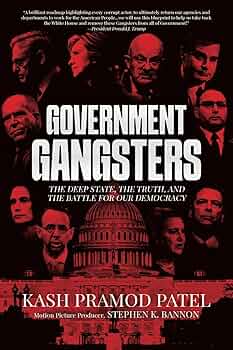
‘Government Gangsters: The Deep State, the Truth, and the Battle for Our Democracy’

Surreal novelist Joseph Heller once wrote, “Just because your paranoid doesn’t mean they aren’t after you.”

Kash Patel, President Trump’s nominee to head the FBI, survived a bevy of encounters from Deep State folks who really were out to get him when he held a number of high-level government positions in Trump’s first administration. He documents those confrontations in his important book, “Government Gangsters: The Deep State, the Truth and the Battle for Democracy.”

In a bold and candid narrative Patel offers more than an insider’s perspective on the snake pit that is Washington, D.C. He has the receipts, the insights and provides possible solutions to draining a swamp teeming with corruption, graft and lawfare shenanigans.

The author admits he finds it hard to believe how a former public defender, federal prosecutor and congressional staffer found himself front and center in every major national security and political battle with the Deep State for seven years. “Government Gangsters” provides readers a first-person perspective on how the corrupt government bureaucracy operates; how it works tirelessly to cancel and ruin those who oppose them.

Is the Deep State still out for Patel’s scalp? He acknowledges that Government Gangsters” was difficult to publish because it is the book the Deep State doesn’t want Americans to read.

As a former government employee with a high security clearance Patel’s book had to go through an extensive prepublication review. The obstruction occurred when nine separate agencies and departments stymied his efforts for several months at going public with his experiences.

“They delayed publication for almost eight months (stretching out a process that normally takes three to four months) to edit minor parts of ten paragraphs. Only after I filed a federal lawsuit against the government did the Department of Defense (DoD) magically finish its work and ‘release’ my manuscript,” Patel wrote.

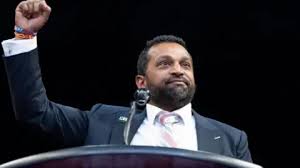
Kash Patel addressing MAGA rally.

Rising Through the Ranks

Patel worked for a little over a decade as a public defender in Florida before he began his work in public service. In 2014 he was hired by the National Security Division of the DOJ as a terrorism prosecutor.

During President Trump’s first term Patel worked with former California congressman Devin Nunes on the House Permanent Select Committee as the lead investigator into the Russian collusion hoax. The subsequent “Nunes Memo” spotlighted how the FBI shamelessly used entrapment and extortion to further its sham investigation into charges that candidate Trump and later President Trump colluded with Russia to win the presidency.

His excellent work as a congressional staffer led to further prominent posts as a national security advisor, senior advisor to Rick Grenell, the acting Director of National Intelligence, and chief of staff to Christopher Miller, the acting U.S. Secretary of Defense.

In each of those positions Patel battled the Deep State and ultimately won. His process was always the same: he gathered extensive paper trails and conducted interviews that helped expose multiple wrongdoing and abuses; exposed the perpetrators with incontrovertible evidence and fortified himself to weather the incoming personal attacks from those agencies, departments and individuals he was exposing.

Exposing the Deep State

The book consists of five parts and levels its investigative guns at the Department of Justice; the FBI; the National Security Council and the intelligence community; the Department of Defense and last but not least, January 6th, or as Chapter 17 is titled, “The Insurrection That Never Was.”

Patel’s prosecutorial chops are on full display in every chapter. He covers the full gamut of D.C. politics, detailing how the DOJ has created a two-tier system of justice; shares keen insights on the FBI and Russia Gate; outlines the corruption of the intelligence community; details how the Department of Defense has become increasingly politicized, and comments on how the FBI “crossed the Rubicon” with the unprecedented raid of Mar-a-Lago.

“Their big show was just another attempt to craft a political narrative to discredit Trump and prevent him and the America First movement he represents from having power ever again,” he writes.

One shocking example of D.C. corruption concerns a Department of Defense agency called the Office of Net Assessment. Purportedly it was established to prepare America for future threats and warfare. In reality the ONA has not produced a net assessment in 15 years. What it has done, though, is become a cash cow cutout for multiple federal agencies to fund research against political opponents.

One example he shares is how the ONA paid over a million dollars to a contractor for “research.” The recipient was Stefan Harper, the same guy who was being paid by the FBI to spy on Carter Page and George Papadopoulos as part of the Russia Gate scandal.

Shining the spotlight on the Deep State may cause those who’ve abused their power to scatter, but it doesn’t fix what’s wrong. That’s why Patel also provides specific recommendations on how to address the systemic issues affecting those agencies he has investigated. Two suggestions he offers are moving the FBI out of D.C. and civil service reform that would allow a president to fire executive branch bureaucrats who refuse to carry out their orders.

President Trump has publicly stated Patel’s book provides a blueprint for plans on reforming the Deep State, undoubtedly a significant reason why many in D.C. hate the thought of him as FBI director. A real eye opener is offered in one of three appendixes where Patel names members of the Deep State and the positions they hold or have held.

“Government Gangsters” provides concrete evidence that the Deep State exists. What President Trump and elected officials do about it the next few years will determine what kind of America we leave for our children and grandchildren.

Government Gangsters

By Kash Pramod Patel
Post Hill Press (August 1, 2024)
Paperback 288 pages

Thanks for reading Dean Riffs. Welcome to all those who love personal liberty, capitalism, and who believe God has blessed America.

Copyright 2025, Dean A. George© 

‘Turning the Page’ on the Hapless Department of Education

I recently heard from a virulent Never Trumper about the president-elect’s pledge to terminate the federal Department of Education.

Academic sheeple seem to think that revoking the bureaucratic behemoth will lead to the closure of scores of colleges and universities.

In the famous slurred words of our outgoing current president, that’s “malarkey.”

The DoE is a useless federal department that has as much to do with improving education as a Michelle Obama school lunch. Higher ed types froth at the mouth about eliminating the DoE bureaucracy because they were educated in universities sucking at its teat. Now they work at those same universities, and they’ve joined the SuckFest, too.

The Department of Education (DoE) was created in 1979 by the Jimmy Carter administration. The sole reason for the creation of the Department of Education as a cabinet position was because President Jimmy Carter was fulfilling a 1976 campaign promise made to one of the nation’s largest labor unions, the National Education Association (NEA).

Nothing like creating a federal bureaucracy to guarantee new inefficiencies and inconvenience for the people its intended to help. The DoE’s track record with K-12 education is even worse but that’s a subject for another day.

According to its website, the mission of DoE is “to promote student achievement and preparation for global competitiveness by fostering educational excellence and ensuring equal access for students of all ages.”

Their mission statement is spelled correctly, and the grammar is fine, but if any federal agency deserves a dunce cap it’s this one.

Today the bloated and beastly DoE has 4,400 employees and a FY 2024 budget of $238.04 billion distributed among 10 sub-agencies. I’m no accountant, but I’m pretty sure that’s even worse than Kamala Harris’s campaign burning through a measly $1 billion in 107 days.

The DoE oversees the Federal Loan Program (FLP) that has a debt of $1.7 trillion. And then there’s DoE’s bungling of a new financial aid application called the Federal Application for Student Financial Aid (FASFA). This program was meant to simplify the application process for students and parents, but the confusion has been costly.

The Wall Street Journal reported in September a 9% decline in university applications among first-time applicants, and an overall decline of about 432,000 applications due to problems with the process.

To say the new application process has experienced issues is like saying Kamala would have won the election if it weren’t for the Electoral College and the popular vote.

What rational person would support an agency with such a track record? Only eggheads who believe they are dependent on DoE’s largesse and don’t understand distribution networks.

The concern that eliminating the DoE will financially devastate colleges and universities is laughable. What’s not laughable is the average cost of tuition, fees and room and board for an undergraduate degree has increased by 169% since 1979. The average cost of an undergraduate degree when the DoE was created was $5,010 for private institutions and $2,330 for public institutions. Is it a coincidence that the costs of higher education have risen dramatically the past 45 years since the creation of the DoE? Hmm…

The Pell Grant program is the largest source of federal grant aid for college students and is a cornerstone of the federal student aid system. Unfortunately, the administration of those grants is the responsibility of the DoE. The grants were created as part the Higher Education Act of 1965 and were known at the time as Basic Opportunity Education grants. Their name was changed to Pell Grants in 1972 in honor of Senator Claiborne Pell, a sponsor of the bill.

If federal education grants were issued in the 1960’s and DoE wasn’t created until 1979, how did colleges and universities receive their student aid money? Federal funding was administered through the individual states, college boards and other federal programs such as the Department of Health, Education and Welfare (HEW) founded in 1952 under the Eisenhower Administration.

The federal government has historically been involved in public education for two centuries, but its role was more of a gatekeeper than a ham-fisted dictator.

There is no plausible reason why the federal government can’t block-grant education money back to the states and return financial control to local authorities who possess more accountability and competence than D.C. bureaucrats with no skin in the game.

The country needs the DoE like it needs another four years of open borders, 20 percent inflation and Kamala Harris’s word salads.

For all the Trump deranged academics and college administrators having a hissy fit in their ivory tower safe spaces, take a deep breath, grab a chill pill and unburden yourselves from what has been the past 45 years.

The incoming Trump administration has got this.

Thanks for reading Dean Riffs. Welcome to all those who love personal liberty, capitalism, and who believe God has blessed America.

Copyright 2024, Dean A. George© 

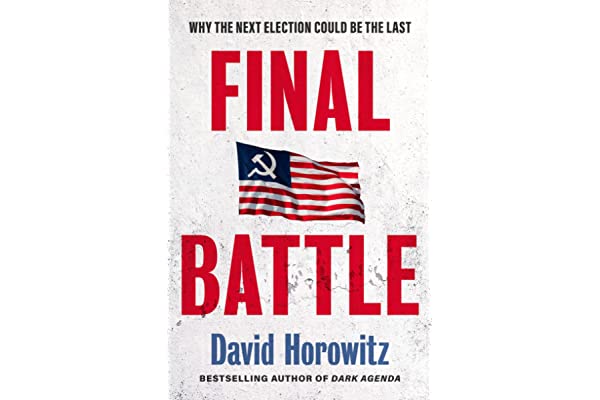
Final Battle: The Next Election Could Be the Last – Book Review

Type: Non-fiction

Category: Political Parties

Author: David Horowitz

Pages: 256

Publisher: Humanix

List Price (Hardcover): $22.99

The late Walt Kelly’s comic strip character Pogo famously opined, “We have met the enemy, and he is us.” Bestselling author and political commentator David Horowitz proves Pogo’s point masterfully in his latest book, “Final Battle: The Next Election Could Be the Last.”

Horowitz asserts that the Democrat Party is the real danger to democracy as they continue chipping away at the foundation of our constitutional republic.

Alarmingly, they are closer to succeeding at remaking America than many realize.

Raised by Communist parents, Horowitz knows exactly where today’s progressives are steering America, and his book is a klaxon horn warning Americans the ship of state has passed the reefs of political fascism and is in serious danger of grounding itself on the shoals of a totalitarian future.

“When the president of the United States declares, as Joe Biden did in 2019, that ‘systemic racism…has been built into every aspect of our system,’ he is endorsing the anti-American radicalism of critical race theorists, Black Lives Matter activists, and cultural Marxists,” Horowitz writes.

Beginning with the questionable election results of the November 2020 election, Final Battle takes readers on an instructive tour of Democrat planned destruction designed to defame America’s history and traditions, undermine the integrity of our elections, politicize our government agencies, indoctrinate the military with mandatory critical race theory instruction, and obliterate our borders by granting noncitizens voting, welfare and healthcare privileges.

Final Battle indicts events of the last three years, including the Left’s impotent response to the Black Lives Matter and Antifa riots in the summer of 2020. It also addresses the faux J6 insurrection and the sham impeachments of Trump, noting that the House impeachment managers didn’t bother delivering the second impeachment charge to the Senate until five days after Trump left office.

“In other words, Democrats were intent on removing a private citizen from an office he no longer held. This made no sense except as a perverse expression of their obsessive hatred of the man himself,” Horowitz notes in Chapter 2.

Horowitz doesn’t mince words in Final Battle, mapping out in 11 economical chapters how citizens’ constitutional rights are frequently being undermined by politicians, bureaucrats, military leaders, federal courts, government health agencies and non-governmental organizations funded by radical financiers like George Soros and Tom Steyer.

“Culture matters. In their zeal to remake the world, Democrats have ignored the consequences of their actions and the human tragedies they have caused,” he writes on the open border crisis. Calling open borders “a terrible idea,” the authors adds, “No other country of consequence has them. In their zeal to gain political power, Democrats have grossly diminished the societies they govern and the lives in their care.”

In Chapter 7’s “Reimagining the World,” Horowitz reiterates the problem with progressives’ unrealistic plans: “The chief problem with utopian schemes: the detachment from reality that comes from replacing the lessons of experience with ideological dogmas.”

Horowitz not only torches liberal cows like Black Lives Matter and the Green Agenda, he also highlights names he blames for much of the unrest the past three years, including Joe Biden, Anthony Fauci and Alexandria Ocasio-Cortez. Granted special recognition for his hypocrisy and disloyalty to his oath of office is Joint Chiefs of Staff Mark Milley.

Two examples Horowitz noted included Milley’s analogy of comparing Donald Trump to Adolph Hitler, and his flip flopping when Trump wanted to invoke the Insurrection Act when a Black Lives Matter mob torched the Church of the Presidents in Lafayette Square. Milley belittled Trump’s request, telling the president, “When guys show up in gray and start bombing Fort Sumter, you’ll have an insurrection. I’ll let you know about it,” Milley said.

Later when Biden and Nancy Pelosi referred to January 6 as an insurrection, Milley “remained dutifully and irresponsibility silent,” Horowitz quotes two Washington Post reporters.

“That such a confused, ignorant and fanatical individual is the head of America’s military forces ought to be deeply troubling to anyone concerned not only about civilian control of the military but the security of America itself,” Horowitz writes of the four-star general who helped mastermind America’s worst military event since Pearl Harbor.

Final Battle is buttressed by 34 pages of foot notes and is written in a format that is succinct, comprehensible and reads like a novel. Horowitz has again done America a favor defending it from forces working tirelessly to transform it into another failed utopian state.

Thanks for reading Dean Riffs. Welcome to all those who love personal liberty, capitalism, and who believe God has blessed America.

Copyright 2023, Dean A. George© 

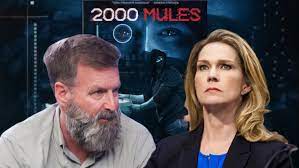
2000 Mules: They Thought We’d Never Find Out. They Were Wrong – Book Review

Type: Non-fiction

Category: Elections, Political Corruption and Misconduct

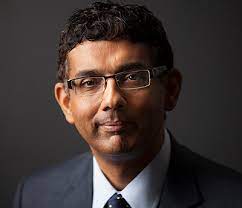
Author: Dinesh D’Souza

Pages: 208

Publisher: Regnery Publishing

List Price (Softcover): $26.99

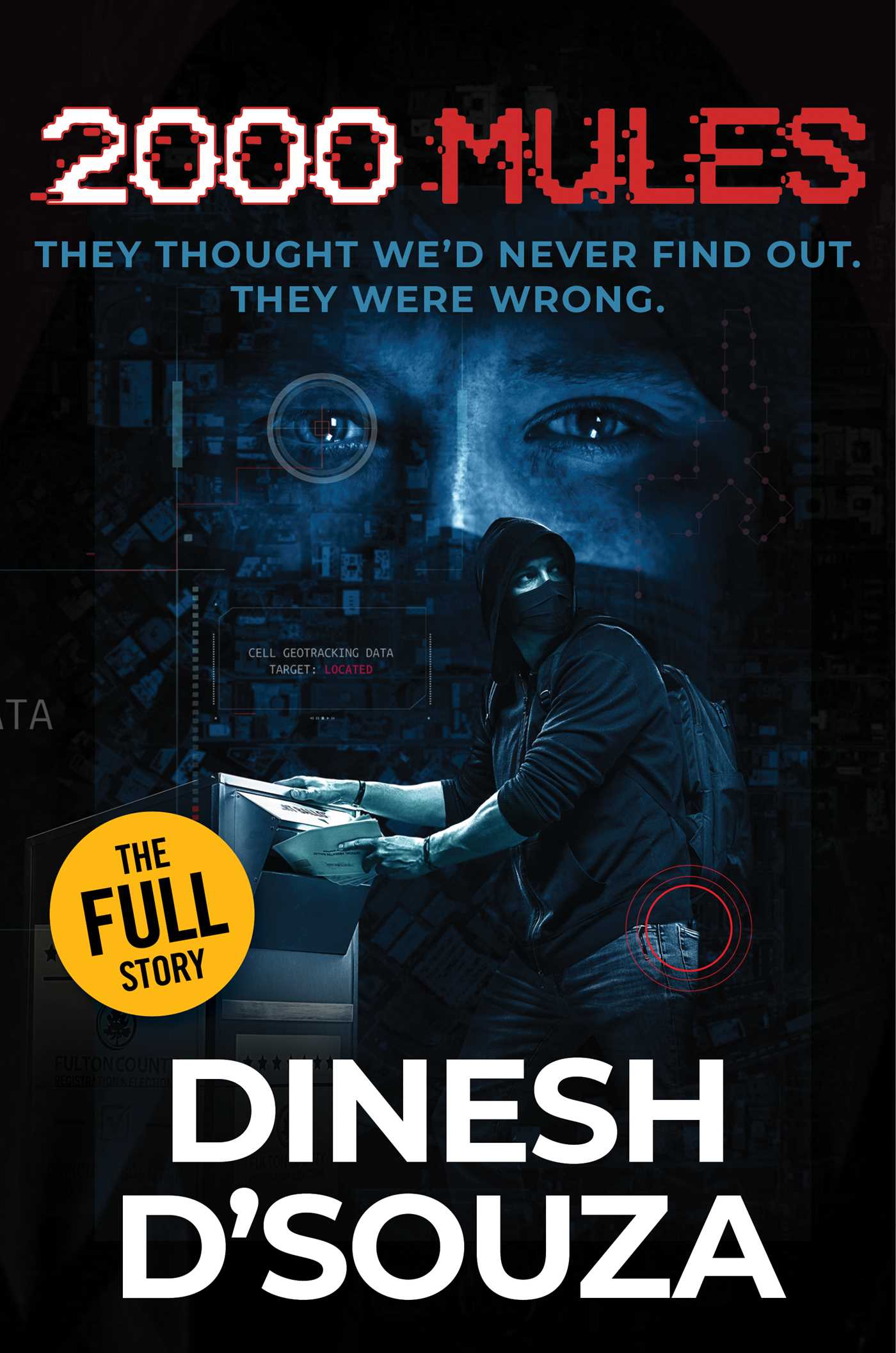
Dinesh D’Souza has the receipts on what happened in the fraudulent 2020 election, and he shares all of them in Amazon’s best-selling 2000 Mules: They Thought We’d Never Find Out. They Were Wrong.

Following his successful documentary by the same name, D’Souza lays out the allegations of voter fraud and election irregularities with such specificity and incontrovertible evidence that Never Trumpers and deluded Democrats will find it hard to rebut the eyewitness testimony, video confirmation and geotracking evidence he reveals.

The 2020 election was arguably the most corrupt election in modern times, and those responsible are still at large and running (and ruining) the country, notes the successful author, film producer and podcast host. D’Souza provides even more documentation, empirical evidence, and mathematical probability in his book than he did in his documentary.

“The Democrats stole the rights of the American people to choose their own elected leader. They stole our vote,” D’Souza writes. “I, for one want them to return what they stole, and I highly doubt that I am alone in that sentiment.”

The political playing field is littered with many who have alleged election fraud but failed to prove it, but D’Souza succeeds in his slim 10-chapter book. 2000 Mules shows through cyber forensics as reliable as DNA and fingerprints how the Democrats arguably engineered the biggest election fraud in U.S. history, why it matters and how to prevent them from ever doing so again.

True the Vote

The core of D’Souza’s book and documentary revolves around the cyber sleuthing conducted by True the Vote founder Catherine Engelbrecht and her business partner, Gregg Phillips.

Engelbrecht founded True the Vote in 2010 as a nonprofit organization to get citizens involved in the process of ensuring honest elections. She was targeted early on by the Obama Administration’s IRS, OSHA, the Bureau of Alcohol, Tobacco and Firearms and the FBI but the Texas native has been relentless with her crusade of exposing election fraud.

Her partner Gregg Phillips has been tracking election fraud for decades and has likewise been harassed by government entities since partnering with Engelbrecht. In fact, shortly after the release of the 2000 Mules book, both Engelbrecht and Phillips served nearly a week in jail for refusing to release the name of a whistleblower who helped expose illegal election activities in Michigan.

The Validity of Geotracking

Geotracking is the means of identifying the current or past location of individuals using specific cellphone ID that reveal a user’s precise location at any given moment. It is used routinely in intelligence and law enforcement work and True the Vote used it to track mules engaged in paid ballot trafficking.

D’Souza points out that ballot harvesting, or vote harvesting, is legal in 27 states, but ballot trafficking (casting absentee ballots or mail-in ballots without voter authorization) is illegal in every state, doubly so if the trafficker is being paid.

By analyzing the geotracking signals of 2000 ballot mules paid to deliver ballots at multiple drop boxes in the five swing states that all went for Biden, D’Souza argues the Democrats knew precisely where they had to cheat and by how much to swing the election.

“This evidence acquired by True the Vote shows coordinated fraud on a giant scale, unprecedented in a presidential election,” he writes in Chapter 4, Herd of Mules.

True the Vote did not stop with collecting and analyzing geotracking data, D’Souza notes. They further supplemented their thesis with four million minutes of video evidence taken of the illegal ballot trafficking in swing states during the 2020 presidential election and the January 2021 Georgia U.S. Senate runoffs.

There would have been much more footage to review but the swing states either refused to provide footage (some claimed they had no footage at all despite legal requirements cameras be utilized at all ballots drop locations), others had their cameras turned off or pointed the wrong direction, and some states provided images of such low quality they were useless.

Following the Facts           

2000 Mules provides even more empirical evidence outlining the breadth and scope of corruption in the 2020 election, including: non-profit agencies organizing and orchestrating ballot drops (Chapter 6’s Old School Heist), the dark funding schemes financing the operation, (a shout out to Mark Zuckerberg in Chapter 7’s Following the Money), and why the Republican establishment response was such a failure (Chapter 8’s Looking the Other Way).

D’Souza addresses complaints to his findings with masterful precision in Chapter 9’s Objections and Refutations, including those skeptics questioning the accuracy of geotracking, the validity of video evidence (don’t believe your own eyes), and those foolishly arguing that ballot trafficking is legal. It isn’t. Anywhere.

The book’s final chapter is based on suggestions from experts on how to fix election fraud, including increasing the number of poll watcher volunteers and citizen challenges on the county and municipal levels; demanding federal Republican officials focus more on the nuts and bolts of counting the votes rather than merely getting people out to vote, and prosecuting those who violate existing election law.

D’Souza concludes his impressive work by acknowledging it is unlikely that Biden will be removed from office or that there will be a redo of the 2020 presidential election, but adds a stunning admission as to the only way he believes integrity can be restored to our elections:

“To rectify the desecration of the 2020 election by the Democrats, the prize must go to the actual winner. Far-fetched though it may be to bring about, it’s the only way to fully restore the integrity of the democratic process that was grossly and criminally corrupted in the 2020 election.”

John Adams famously noted an important trait about facts that critics of 2000 Mules would be wise to consider: “Facts are stubborn things; and whatever may be our wishes, our inclinations, or the dictates of our passions, they cannot alter the state of facts and evidence.”

Thanks for reading Dean Riffs. Welcome to all those who love personal liberty, capitalism, and who believe God has blessed America.

Copyright 2022, Dean A. George© 

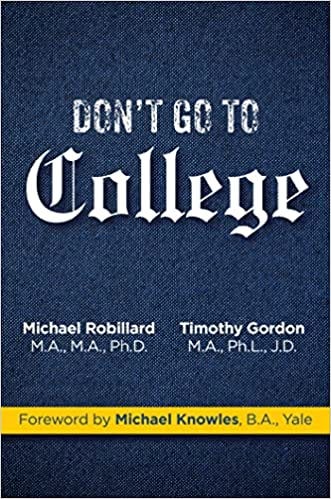
Don’t Go to College: A Case for Revolution – Book Review

Type: Non-fiction

Category: Cultural Policy, Education

Author: Michael J. Robillard, Timothy J. Gordon

Pages: 234

Publisher: Regnery Publishing

List Price (Softcover): $26.99

The book “Don’t Go to College: A Case for Revolution” should come with a trigger warning for those in higher education.

College students and their professors in ivory towers will find safe spaces and support animals useless when reading this book. A better safe space would be a nuclear fallout shelter because authors Michael J. Robillard and Timothy J. Gordon go nuclear on today’s mass indoctrination courses in higher education.

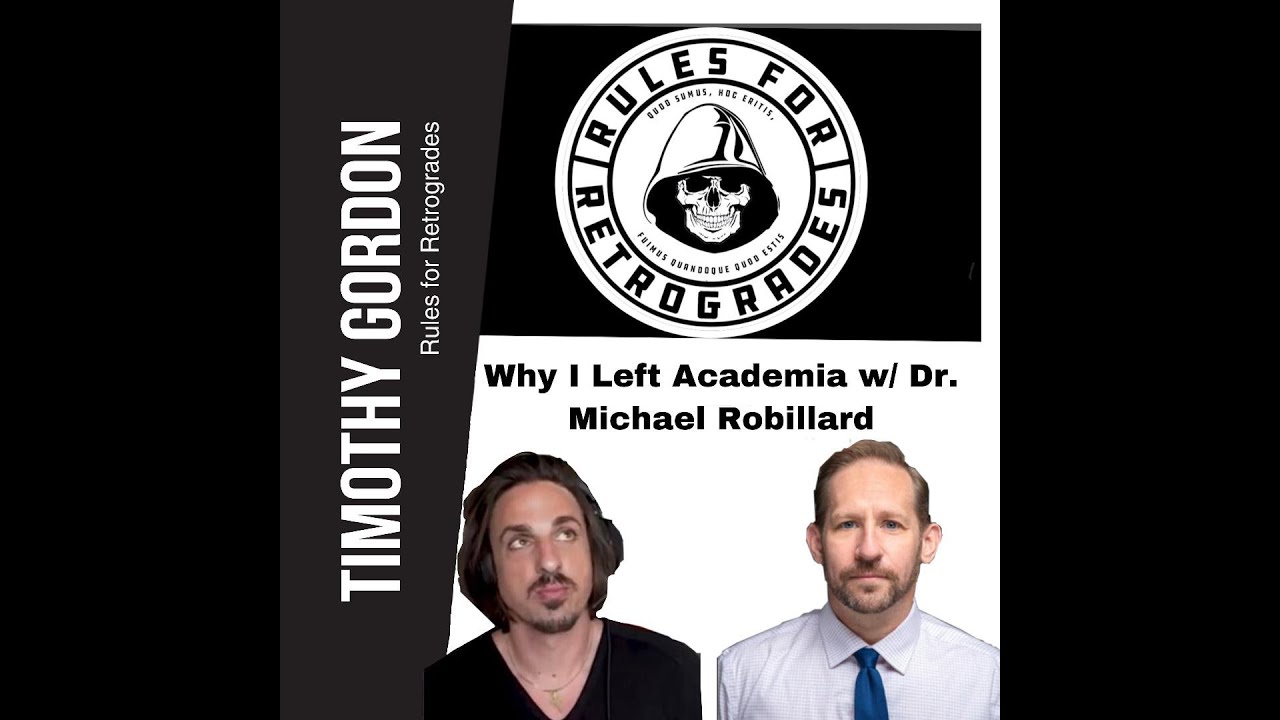
Robillard is an Iraq War veteran, independent scholar and philosopher, and Gordon is the author of numerous books and hosts the Rules for Retrogrades podcast.

The authors don’t mince words because they have experienced the rapid disintegration of higher education from inside the college bubble as both students and professors. Between them they hold six post-graduate degrees, and Gordon gained national notoriety in 2020 when he was canceled as theology chairman from a California Catholic high school for his opposition to Black Lives Matter.

g

The premise of their book is simple: colleges and universities have become an inversion of their original purpose: rather than a whetstone to sharpen a student’s intellectual skills and hone critical thinking abilities, instead they are mass producing young adults who are infantilized, arrogant and bereft of marketable skills that enable success.

Or as the authors quote British journalist and Oxford graduate James Delingpole: “Universities are madrassas of woke stupidity.”

The second chapter on Wokeism centers around the intersectionality spiderweb: Critical Race Theory, Anti-Colonialism, Feminism, LGBTQ+.

“The “+” sign is a conceptual placeholder for literally any and all future ‘marginalized’ groups imaginable, no matter how niche, bizarre, vicious, contradictory, illogical, incoherent or detrimental to individuals and civilizations as a whole. Indeed, the weirder and more niche, and therefore more marginalized, the better,” the authors write.

Whether describing the history-illiterate 1619 fallacy or legitimizing cross-dressing men who insist they can get pregnant, the authors summarize much of the woke thinking simply: “In other words, we’re supposed to deny reality and affirm someone else’s desire to live in a fantasy world.”

http://www.deanriffs.com/wp-content/uploads/2022/09/Robillard.jpeg

Michael Robillard M.A., M.A., Ph.D

Aside from higher education’s emphasis on wokeism and the routine trashing of America, the authors also cite the ruinous debt students accumulate when pursuing a four-year degree, noting that in the last 20 years average college costs have more than doubled.

“Like drug dealers, college administrators want to get you hooked on the opiate of higher education so they can profit further,” the authors write in Chapter 3. “Given how many kids now go to college – and given how academically subpar college has become – an undergraduate degree is effectively the equivalent of your grandfather’s high school diploma.”

The book makes it clear that the scourge of liberal/progressive neo-Marxism infecting America’s campuses is not relegated to just liberal arts colleges and the social sciences, but even schools and curriculums focused on science and mathematics.

“The same neo-Marxists who corrupted the humanities are just as eager to corrupt the sciences. If they succeed in doing so, the results could be catastrophic,” the authors warn. “We’ve seen politicized science many times before – most notoriously in the great tyrannies of the twentieth century.”

Timoth J. Gordon M.A.,Ph.L., J.D.

In Chapter 5 the authors expound on how universities are little more than adult day care centers and how they retard the maturation process in young adults.

“Moms and dads alike want their kids to ‘grow up’ and ‘gain experience,’ not realizing that the experience their kids will gain will not be morally formative and that they are actually discouraging their kids from growing up,” they bluntly state.

Aside from the cultural indoctrination and crippling debt a college degree entails, the authors also warn parents of a third red flag on the majority of college campuses: sexual degeneracy. Commenting on the frequent cases of students getting blackout drunk and engaging in transactional sex, the authors write:

“Our society as a whole seems unconcerned about how this might alter the moral outlook of generation after generation, not just in terms (at a minimum) of legitimized fornication, promiscuity, and sterility, but also in terms of normative sexual boundaries and definitions of deviancy (as with the LGBTQ+ movement, which is stronger on campus than anywhere else).”

In lieu of college, what the authors prescribe is learning a trade or pursuing a career that pays while you get on-the-job experience. So rather than racking up thousands of dollars in debt and being indoctrinated by professors who have never held a real job, you can educate yourself like George Washington and Benjamin Franklin did while earning a respectable living.

The book quotes renowned blue collar advocate Mike Rowe to support their thesis: “We’re lending money we don’t have to kids who can’t pay it back to train them for jobs that no longer exist. That’s nuts.”

The authors note that some careers like lawyers and doctors do require college, so in Chapter 6 they provide a list of “safer” schools for undergraduate studies.

For most students though, Robillard and Gordon suggest pursuing a self-education by narrowing down a subject specialty by reading “A Student’s Guide to” books in the Intercollegiate Studies Institute (ISI Books) series or Regnery’s Politically Incorrect Guide courses. Both of those series cover curriculum studies universities used to teach minus the leftist mumbo jumbo taught today.

Forty-nine pages of this profound book reproduce 19th century theologian John Henry Newman’s discourse on what a university should be and a sobering epilogue by Robillard on why he now disavows academia.

Informative, provocative and refreshingly candid, this perceptive book provides a cogent argument why society needs to rethink the necessity of a college education and pursue more practical alternatives that will help citizens and our country be the best we can be.

Thanks for reading Dean Riffs. Welcome to all those who love personal liberty, capitalism, and who believe God has blessed America.

Copyright 2022, Dean A. George© 

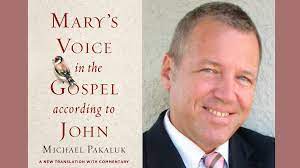
Book Review – Mary’s Voice in the Gospel according to John

Type: Non-fiction

Category: Christianity

Author: Michael Pakaluk

Pages: 328

Publisher: Regnery Gateway

List Price (Softcover): $16.99

The Gospel according to John has long been considered different than the synoptic gospels of Matthew, Mark and Luke. The latter tell the story of Jesus Christ from the disciples’ perspective, while the former describes Jesus’s life and ministry from Christ’s viewpoint.

Catholic University Professor Michael Pakaluk’s book is a new translation of the Gospel of John complete with insightful commentary and a verse-by-verse overview. Many passages were translated from original Greek texts. His work is premised on the idea that Mary was a significant influence on John’s approach to his Gospel.

John the Evangelist is historically known as Christ’s beloved disciple and the longest living of the apostles, but Pakaluk offers another significant reason in Mary’s Voice in the Gospel according to John why that Gospel is unique: Jesus in his dying words on the cross committed his mother to the care of John for the remainder of her days.

John 19:26-27 (KJV): “When Jesus then saw His mother, and the disciple whom He loved standing nearby, He said to His mother, ‘Woman, behold, your son!’ Then He said to the disciple, ‘Behold, your mother!’ From that hour the disciple took her into his own household.”

It is believed that Mary died in 60 or 65 AD and the disciple and Mary lived together for 30-35 years. Both Mary and John were believed to be contemplative people and the author suggests that no one could have lived with the Lord’s mother that length of time without being moved by her understanding of the life and mission of her Son.

“Together they shared a single love, and, like others who deeply miss the presence of their beloved, they would have yearned to be closer to him by remembering together what they had noticed about Jesus, what he had done, and in what setting,” Pakaluk writes in his Introduction.

In his fascinating translation the author identifies those parts of John’s writing which may have been influenced by conversations and recollections with the mother of Christ.

For example, who knew Jesus and his special calling better than his mother? And in John’s Gospel women play a much more significant role than in the other three gospels, from the wedding at Cana where Mary informs Jesus the hosts are out of wine (Jesus performs his first miracle), to the Samaritan woman at the well and the different women witnessing Christ’s crucifixion up close and personal.

“A Gospel dominated by the themes of sorrow and separation at death and the joy of reunion and birth is exactly what one would expect the mother of the Christ to tell,” Pakaluk writes.

Pakaluk believes Mary may have helped shape John’s thinking explicitly and implicitly. Explicitly Mary may have pointed out details to John personally. Implicitly John surely noticed Mary’s lifelong attitude to serve; her contemplative insights about her son, and John’s choice to emulate the Lord’s example of love and devotion for the woman who birthed Jesus.

A professor of ethics and social philosophy in the Busch School of Business at Catholic University in Washington, D.C., Pakaluk counts 19th century English theologian John Henry Newman as one of his major influencers and quotes from his sermons and published works frequently in this book.

“Newman has a special insight into the Gospel of John,” the author told an audience at the Catholic Information Center last year. “Newman’s insights into the characters in the Scriptures is extraordinary. I’ve learned how to read the Bible, especially the New Testament, from Newman.”

As he did with his earlier work The Memoirs of St. Peter: A New Translation of the Gospel According to Mark, Pakaluk enjoys utilizing a different approach to his research and writing. He conducts his literary archeology by exploring the formation of texts influenced through other persons rather than previous texts.

His translation of Mark’s Gospel was written through the perspective of the Apostle Peter, and John’s Gospel is viewed largely through the prism of Mary’s insights and recollections. Regarding his approach to translation, Pakaluk admits to wanting to write works that are crisp and striking.

“If someone reads this and says it’s like reading the Gospel of John for the first time, it’s a success, “the author says.

That approach has won over readers in two of the four gospels he has translated, and one can only hope Pakaluk is planning similar efforts with the Gospels of Matthew and Luke.

Thanks for reading Dean Riffs. Welcome to all those who love personal liberty, capitalism, and who believe God has blessed America.

Copyright 2022, Dean A. George© 

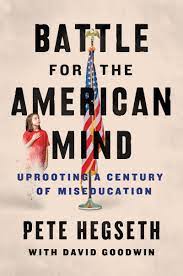
Battle for the American Mind: Uprooting a Century of Miseducation – Book Review

Type: Non-fiction

Category: Federal Education Legislation

Author: Pete Hegseth and David Goodwin

Pages: 288

Publisher: Broadside Books

List Price (Hardcover): $17.99

It’s impossible to maintain a constitutional republic like America’s with a citizenry who can’t think for themselves. Thanks to Progressives’ stranglehold on public education, millions of Americans are bereft of critical thinking skills due to decades of indoctrination.

It’s widely believed this insidious indoctrination in public schools dates back to the 1960’s, but as bestselling author and Fox and Friends co-host Pete Hegseth and magazine editor David Goodwin detail in their excellent book, the Progressives’ game plan to control the “supply lines” of future citizens goes back 120 years.

A central thesis of their brilliant book promoting classical Christian education revolves around a Greek word called “paideia.” This little-known word has been a linchpin in Progressive plans to hijack education because it involves the “rearing, molding and education of children.”

American Progressives knew, like the ancient Greeks, that the best way to control culture was by controlling education.

As the authors point out, whereas the ancient Greeks used paideia to promote godly virtues like wisdom, courage, and justice, Progressives removed the religious context and over time adopted pseudo-virtues based on scientism principles like race, gender, and oppressor/oppressed identities.

“Hence the term ‘virtue signaling’ when these are on exhibition. But these ‘virtues’ are based in cultural Marxism, not Christianity,” the authors write in Chapter 8, Reason and Virtue. In other words, Progressivism is not attached to a divine ideal but rather humanism and the pursuit of a godless utopia, or what the authors call the Cultural Marxist Paideia (CMP).

For most of two thousand years Western children were educated in the classical Christian tradition, or Western Christian Paideia (WCP). Children studied history, Latin, Socrates, Plato and Aristotle, math, poetry and logic. Students acquired and cultivated wisdom by studying history and the ancient philosophers as students in classical Christian schools do today.

In the 1890’s, Progressives like John Dewey and Horace Mann sought to supplant WCP with a American Progressive Paideia (APP) that would repurpose education as a tool for social manipulation and industrial progress while removing God, Christ and Christianity.

“The Progressives realized that true classical Christian education was more powerful than just teaching virtues – it cultivated a paideia with a foundation in divine Truth. At its very core, it reaches for an ideal higher than human institutions,” the authors write in Chapter 5, The Elitist Roots of Progressivism.

Hegseth and Goodwin note that Progressives of that era knew that dropping classical learning practices without replacing them with an inspiring alternative would be unacceptable to the general public. They cleverly substituted patriotic fervor and nationalism in place of God and Christ, thereby enabling schools to become a pliant tool for social reform with a love for America as the backdrop.

The authors point out it was Progressives like President Woodrow Wilson who introduced the patriotic holiday Flag Day and a socialist minister named Francis Bellamy who wrote the Pledge of Allegiance.

It wasn’t until the Eisenhower administration that the words “under God” were added to Bellamy’s original pledge.

“Once the APP had been universally taught in schools, say between 1925 and 1965, its resulting culture dominated for another generation – until about 2005,” the authors write. “Beginning somewhere between 2000 and 2005, the American Paideia was replaced with the Cultural Marxist Paideia, which obtained its authority from ‘equity’ vested in individual identity.”

The authors note that today, following 20 years of the Cultural Marxist Paideia, people can shoplift without consequence, riots on the Left are dismissed as “mostly peaceful” while protests on the Right are considered “insurrections,” and rapes occurring in public restrooms are condoned because of gender identity.

“Imagine how powerful the Cultural Marxist Paideia will be once it has been taught for a generation – in 2045,” Hegseth writes. “Imagine the world your kids and mine are entering.”

A combat army veteran, Hegseth notes that while the Left now controls the “commanding heights” and is “shooting from concealed and fortified positions,” what’s needed is a “radical reorientation” in how parents approach education. In short, an insurgency to reform education.

The authors note we need to return to our Judeo-Christian roots and promote classical Christian schools that train students in reasoning and persuasion, science and mathematics, history and rhetoric.

“Instead of throwing our kids into the cultural deep end and hoping they find the right answer, classical Christian education builds a foundation of virtue and knowledge – a lens through which students are prepared to explore and engage with our past, present, and future with wisdom.”

Well written and seasoned throughout with indisputable facts and logic, Battle for the American Mind is a vitally important work at a critical time in American education. The authors’ compelling narrative provides a deep dive into the history of American public education: what went wrong, why it went wrong, and how to fix it with a return to teaching and learning to love the right things and cultivating our kids’ moral imagination.

Thanks for reading Dean Riffs. Welcome to all those who love personal liberty, capitalism, and who believe God has blessed America.

Copyright 2022, Dean A. George© 

The Diversity, Equity and Inclusivity Ploy

There’s a lot of discussion these days about diversity, equity and inclusivity in workplaces, schools and civic organizations. What exactly is it?

Diversity, Equity and Inclusivity (DEI) is a term used to describe policies and programs that promote the representation and participation of different groups of individuals, including people of different ages, races and ethnicities, abilities and disabilities, genders, religions, cultures and sexual orientations.

Sounds innocuous, right? But there is an underbelly to the DEI philosophy that is toxic. DEI is pure identity politics and often masks itself as Critical Race Theory.

Let’s put the three components of this Marxist philosophy under a microscope:

Diversity

Diversity in any environment is a good thing, though it’s better if diversity occurs naturally based on needs, abilities and interests.

There is no country on earth with a more diverse populace than America, hence our enviable reputation as a melting pot. Our diversity makes us unique, but it’s not diversity alone that makes America exceptional. What makes America special is a diverse population who believe in American ideals like freedom, capitalism and the right to worship (or not) as we please.

Diversity is the chassis, but it is citizens pulling together in common cause that is the engine that makes America go. United we stand, divided we fall. DEI divides and separates us, assigning people to specific boxes.

The focus on emphasizing individual differences, without including a meaningful cause and purpose (not just based on feelings but tangible results), is like a traffic jam with a cacophony of blaring horns and angry shouts where every driver insists, they have the right-of-way.

The Biden administration is very diverse and has checked a lot of the identity politics boxes, but because it works against the American ideal of freedom and merit, this administration is hopelessly incompetent and ineffective because it lacks a proper foundation.

Like Make America Great.

Equity

There has been a concerted effort in recent years to swap the word “equity” for “equality.” Equity is to equality what prunes are to prudent. Those unsure of the difference probably believe in unicorns and magic rainbows.

“Equality” is the pursuit of equal opportunity. “Equity” is a fairytale promising equal outcomes. Try as it may, the government cannot legislate equal outcomes (nor should it), but it has and should support laws guaranteeing equal opportunities.

Last year American Airlines announced plans to hire and train more female and minority pilots. Okay. But what happens if a desired number of female pilots qualify and earn their wings, but there aren’t enough females of a certain minority group to check a specific box? Or, what if there aren’t enough transgender Asian males transitioning to female pilots who even apply?

You think flight cancellations have been bad under the Biden administration to date, just wait until American or Delta cancels future flights because they don’t have enough Native Hawaiian/Pacific Islander cross dressing female pilots to make their quota.

Inclusivity

Merriam-Webster defines inclusive as “including everyone – especially allowing and accommodating people who have historically been excluded (because of their race, gender, sexuality, or ability.”)

It’s always amusing that the people who claim to favor inclusivity stubbornly exclude people with whom they disagree. Greg Gutfeld termed such people the “Intolerati.” Their tolerance and inclusive natures only apply as long as you agree with them. If you disagree, you are excluded from Camp Inclusive.

This three-legged stool of diversity, equity and inclusivity has its roots not in the Constitution, the Bill of Rights or the Declaration of Independence, but in Marxism. Divide people by gender, race, ethnicity, religion and sexual orientation, prey on raw emotions of unfairness and grievance, and DIE advocates have willfully traded objective facts for subjective feelings.

They’re like a dog chasing its tail.

Isn’t it ironic that “diversity” in DIE excludes diverse thinking and opinions? Isn’t it sad that fairytale equity has supplanted the sweat equity of hard work and diligence? Isn’t it pathetic that “inclusivity” focuses on grievances and gripes rather than gratitude and greatness?

Those of us over age 40 remember The Golden Rule: “Do unto others as you would have them do unto you.” That has worked well for over two millennia.

Replacing The Golden Rule with a humanistic ideal that separates rather than unifies is comparable to using a low flow toilet that has to be flushed twice to work properly. What’s the point?

Thanks for reading Dean Riffs. Welcome to all those who love American liberty, free enterprise, and who believe God has blessed our country. 

Copyright 2022, Dean A. George© 

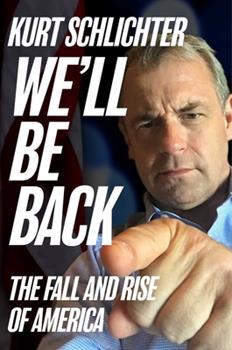
Book Review: We’ll Be Back – The Fall and Rise of America

Type: Non-fiction

Category: Current Affairs

Author: Kurt Schlichter

Pages: 303

Publisher: Regnery

List Price (Hardcover): $26.99

I’m not a lawyer, but I’ve seen enough Perry Mason re-runs to know a good case is based on smart strategy and pragmatism.

In “We’ll Be Back – The Fall and Rise of America,” California trial lawyer, Town Hall columnist and retired Army Infantry Colonel Kurt Schlichter presents a compelling case that our sock puppet president may be dragging America down and out, but it’s premature to write us off as a 21st century Roman Empire in ruins or Orwell’s Oceana.

Thousands of readers know Schlichter for his caustic wit and how he routinely incites pearl clutching among liberals and Never Trump Republicans in his tri-weekly Town Hall columns.

In this new non-fiction gem, he skillfully walks a literary tightrope with a well-researched narrative that is brutally honest, hopefully optimistic, and sprinkled liberally (pun intended) with his trademark humor.

Schlichter notes the U.S. has become flabby with prosperity, self-indulgent and lazy just like the citizens of ancient Rome. The virtues and checks and balances on government intrusions designed by the Founding Fathers have been carelessly discarded and discredited, solely for the pursuit of power, he asserts.

Recent examples illustrating his point could include the D. C. elite undoing historic safeguards like due process, gun ownership and free speech as the J6 committee locks up Capitol Hill protestors indefinitely for, gasp, trespassing; Congress bribes states to employ red flag gun laws, and the sultans of Silicon Valley wantonly stifle open discussions on the Internet.

Schlichter writes how America was at its best in 1991 when defeating Iraq, before morphing 30 years later into the rudderless republic we are today.

The central premise of “We’ll Be Back” is that America is headed for a historic showdown if conservatives don’t regain electoral control. “Colonel K” outlines the different ways that could play out: a national divorce between red states and blue states (as detailed in his six-book Kelly Turnbull fiction series), a second civil war, or subjugation by China or American Marxists.

Schlichter offers thoughtful commentary on all three scenarios, including a civil war brought on by a blue rebellion against a red federal government (less likely because blue states are not contiguous and “its population consists of those needing to be fed rather than those doing the feeding.”

A more likely scenario would be red Americans fighting a blue federal government, and again the red states would have the advantage due to a vast connected land mass and troop composition.

“Do you see a lot of transsexual mime studies majors dropping out of Gumbo State to join the Army to fight guerillas in the Ozarks?” he asks. “The Antifa street punk stuff is all fun and games, especially since the cops are there to protect them, but war is different,” Schlichter notes in Chapter 10’s The Second Civil War: Red Revolution.

Regarding Chinese influence over our economy, Schlichter wryly notes in Chapter 11’s The China Crisis, “They outsource their R&D, and largely steal it from us. We outsource our manufacturing, then pay to import it back.”

He also expounds that China’s mushrooming influence on American society is made possible by opportunistic leaders of both political parties, “composed of the corrupt and the clownish, and usually both at once.”

As mordant as the subject of the fall of America is, Colonel K throws readers a lifeline of hope in the final three chapters on how we can crawl out of the abyss of hopelessness and indifference. As he notes in Chapter 14’s America Comes to Its Senses, the Constitution has not failed. Conservatives just need to rally enough Americans around to our way of thinking.

The alternatives vividly described by the author in chapters 3-12 are too awful to do anything less than rally our fellow citizens.

Chapter 13’s The Authoritarian Temptation is fun to fantasize about but unlike the donkey party, conservatives don’t color outside the constitutional lines.

In various chapters Schlichter underscores a point with fictional vignettes, and none is more hopeful and inspiring than the one in Chapter 16’s The Decision Point: 2024. Readers will be pumping their fists at the description of a conservative Republican president who, in his first acts as president on January 20, 2025, begins draining the swamp by firing FBI Director Christopher Wray, every general on the Joint Chiefs of Staff and Dr. Anthony Fauci.

And that is just an appetizer for what follows, such as defunding universities lacking “ideological diversity” and firing every federal employee that has “diversity,” “inclusion” or “equity” in their job title.”

“We’ll Be Back” is provocative, insightful and well researched. The colonel strategically maps out how conservatives can effectively combat the ruthlessness and evil of the past few years, reclaim the God-given rights that have made America great and restore our country as a moral, sovereign and economic powerhouse.

To read my review of Kurt Schlichter’s previous non-fiction best-seller, The 21 Biggest Lies About Donald Trump (and you!), click here.

Thanks for reading Dean Riffs. Welcome to all those who love American liberty, free enterprise, and who believe God has blessed our country.

Copyright 2022, Dean A. George© 

Back to Top